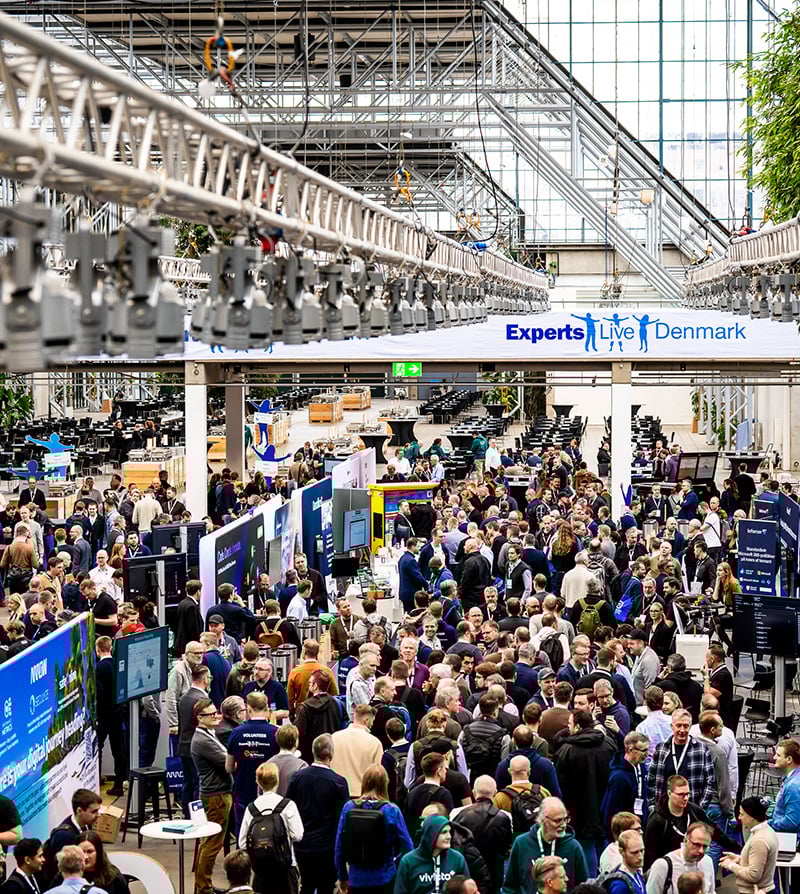
Sometimes you can tell as soon as you walk into a venue that this is not going to be a normal event, and that is exactly how it was at Experts Live Denmark 2026 in Copenhagen. Packed halls, a babble of voices in all kinds of languages. People reuniting after months apart and others meeting for the first time. With over 1,150 participants, more than 100 sessions across 10 tracks, and speakers from over 15 countries, the event was not only large but, above all, a melting pot of knowledge, perspectives, and energy.
What makes ELDK special is the atmosphere. The exchange was open, approachable, and full of curiosity about strategies, new technologies, and different approaches to problem-solving. Jannik Reinhard, Head of AI at Epic Fusion, sums it up: «ELDK26 was a real highlight for me, especially because of the community. We met many industry leaders , and the exchange was extremely valuable –it showed just how open and interconnected the Microsoft ecosystem is today.» And it was precisely this feeling that permeated both days: less competitive thinking, more collaborative development. In an industry that moves so rapidly, that’s exactly what’s needed – honest dialogue among practitioners who grapple with the same challenges every day.
Not just present, but right in the Thick of Things.
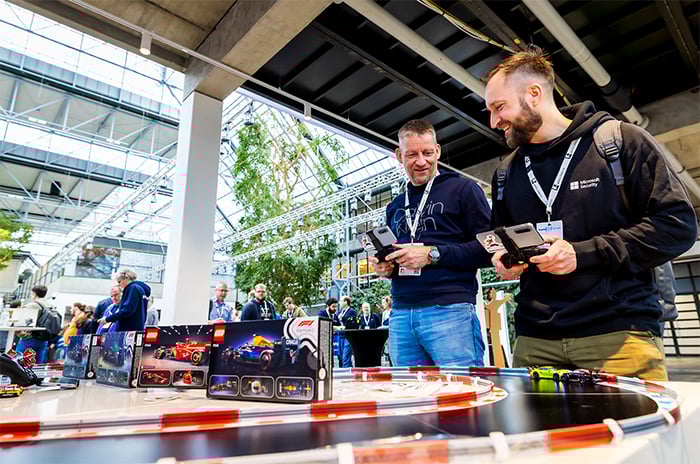
Our booth was consistently busy – and that was not just because of its prime location. The questions we received made one thing clear: companies are no longer looking for individual tools. They are looking for partners who integrate AI, security, and the modern workplace. This confirmed in numerous conversations that the holistic approach we pursue at Epic Fusion is precisely what the industry needs.
What was particularly striking was that many conversations did not revolve around «Which tool do you use?» but rather «How do you integrate it into existing processes?» and «How do you manage the underlying governance?» This shift – from a tool focus to strategy – was a recurring theme throughout the entire conference.
And then there was our slot car track. Between deep-dive discussions, architectural sketches, and governance debates, it provided just the right amount of challenge and variety. A little competition sparks ambition and creates shared experiences. Many visitors came by and stayed for a race, cheering each other on and using the relaxed atmosphere for further conversations. Networking in the fast lane – quite literally.
Two Days, ten Tracks, one common Thread.
ELDK26 spanned two intensive days. The first day was entirely dedicated to full-day master classes: in-depth, hands-on workshops on security, Intune, Azure Networking, Microsoft 365, identity, data and Fabric, AI, and Windows 365. Those who attended did not come for general overviews, but for real, hands-on, expert-level knowledge.
The second day then offered the full spectrum: over 100 sessions spread across ten parallel tracks. The focus was on topics such as security, the modern workplace, Azure, Microsoft 365, Identity, data, AI, AVD/ Windows 365, automation, and development. There were also panel discussions, one-on-one «Ask the Expert» sessions, and a lively expo. The variety of topics was impressive. And yet, one theme ran like a common thread through nearly all the tracks: AI.
Whether in the keynote on a modern defense stack with agentic AI, in sessions on AI agents for Intune and Entra ID, in observability for LLM agents, in the use of MCP in IT operations, or in the zero-trust security of Copilot deployments – AI was no longer an isolated track but permeated virtually every area. The security sessions focused on AI Security Posture Management and how AI-powered SOCs are transforming incident response. In the Modern Workplace track, our own sessions with Jannik and Florian demonstrated how AI-driven insights are transforming troubleshooting and day-to-day Intune administration. In the Identity track, discussions centered on how AI agents are integrated directly into Entra ID and how MCP creates new opportunities for identity governance. And even in the Data track, the focus was on how ML models are trained and applied to streaming data in Fabric.
This was perhaps the biggest takeaway at the conference: AI is no longer a silo. It is a cross-functional technology that weaves its way into every aspect of the Microsoft ecosystem – from security and identity to development and automation.
More than Endpoint and AI: A holistic View.
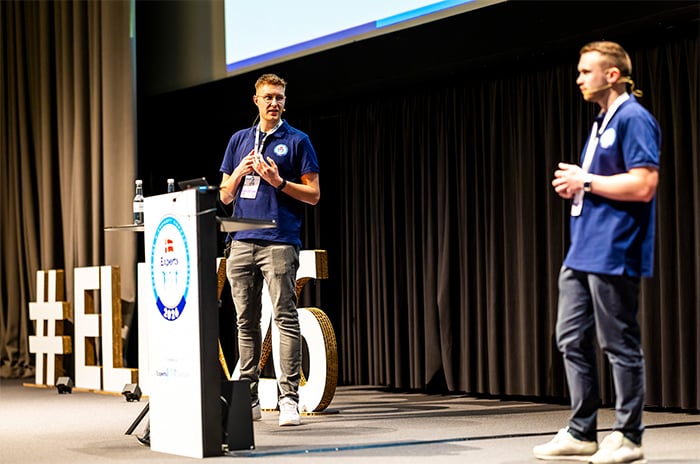
Despite the dominance of AI, ELDK26 was not just an AI conference – quite the opposite. What stood out was the significantly more mature and holistic nature of the discussions compared to previous years. The question was no longer «What can AI do?» but rather «How do we responsibly integrate AI into existing infrastructures?»
Florian Salzmann (MVP) aptly describes it: «What I particularly liked about ELDK26 was the holistic view of the Microsoft ecosystem. It was not just about endpoint or AI, but much more about the entire M365 universe and how the individual components work together effectively.»
This was also reflected in the program: Sessions like «Don't Get Burned by Deprecation» demonstrated the importance of keeping the entire M365 ecosystem in mind. «Enterprise Policy as Code» addressed the governance challenge with hundreds of Azure subscriptions. And in the panel discussions on Data & Development, Security & Sovereign Cloud and AI Disruption, it became clear: Anyone who wants to use AI successfully must understand the entire ecosystem – not just the models.
And: Nothing works without Security.
Another key theme was security – not as a side note, but as a fundamental prerequisite for everything related to AI. Numerous sessions and hallway discussions made it clear: Anyone deploying AI agents, creating new data flows, and driving automation forward must first have a solid security foundation. Identity, data governance, and incident response are not side issues – they are the foundation. This was already evident in the keynote address, where Raviv Tamir from Microsoft presented the blueprint for a modern defense stack – with predictive shielding, agentic AI, and graph-based reasoning. Sessions such as «AI Security Posture Management and Threat Detection,» «Hybrid Identity Under Fire,» and «Securing Generative AI: A Zero Trust Approach to Deploying Copilot» made it clear: AI without a security strategy is a risk, not progress.
Albin Klinkau from AdVision Swiss AG sums it up this way: «The community at ELDK26 was truly impressive.» The security AI topics were particularly exciting at the same time, it became clear how crucial in-depth security understanding and expertise in incident response have become in relation to AI. Paula Januszkiewicz's session on hacking and securing Windows infrastructure was very thorough and addressed precisely the right questions.
This aligns with what we see daily at Epic Fusion: The most exciting AI projects fail not because of the technology itself, but because of a lack of governance and unclear security concepts. ELDK26 demonstrated that the community understands this – and that «security by design» is no longer just a buzzword, but is becoming a lived reality.
Our Key Takeaways: What we are taking away.
AI is no longer a track – it is the foundation. From security and identity to development, AI was present in virtually every session. The question is no longer whether organizations adopt AI, but how they orchestrate it across all workloads. Those who still treat AI as an isolated project are missing the boat.
AI maturity within the ecosystem has reached a turning point. The conversations have fundamentally changed. Instead of «What is Copilot?», we now hear: «How do I orchestrate multiple AI agents across different workloads?» and «How do I deploy MCP productively?» Sessions like «From Prompt to Production» and «Beyond the Hype: Building Agentic AI That Actually Works» demonstrated that the ecosystem has moved from experimentation to scaling.
Integration beats innovation. The best AI feature is useless if it does not fit into existing processes, compliance, and security architectures. The most successful companies we met in Copenhagen do not think in terms of individual tools, but rather in terms of workflows – from identity and data governance to the endpoint.
Security is the entry ticket, not an add-on. No serious AI project can proceed without a solid security foundation. From Paula Januszkiewicz's deep dive into Windows Infrastructure Security to the Zero Trust approach for copilot deployments and AI security posture management – the community understands: Before the first agent is deployed, identity concepts must be in place, data loss prevention configured, and incident response processes implemented.
Community beats content – the real value lies in the network. The best insights didn't just come from the stage. They emerged from conversations at the booth, during the one-on-one «Ask the Expert» sessions, and over coffee between tracks. In a world where technology moves faster than any documentation, a strong network of practitioners is the greatest competitive advantage.
ELDK26 has proven once again: Innovation happens where People meet, not in Slide Decks or Roadmaps.
We will be back. And until then, we will take the energy, the contacts, and the insights from Copenhagen with us into our daily work at Epic Fusion. Because that is precisely the point: A good conference does not end on the last day – its influence continues in every project that follows.
%20-%20Teams%20Logo.png?width=576&height=182&name=Logo%20in%20standard%20arrangement%202%20(RGB)%20-%20Teams%20Logo.png)
